 Free Consultation


Claims Against the Federal Government
Claims Against the Federal Government in Maine, New Hampshire & Vermont
Winning for Our Clients
Claims Against the Federal Government attorneys helping victims recover fair compensation.


You've come to the right place
You’ve Come to the Right Place
When a federal employee’s negligence or misconduct seriously injures you, the government does not simply write a check. You are up against the United States, its agencies, and the U.S. Attorney’s Office, and you are up against a claims process with its own forms, its own deadlines, and its own rules that look nothing like an ordinary injury case.
At Gideon Asen, we built our reputation representing people who have been catastrophically hurt, and we bring that same data-driven, resource-backed approach to claims against the federal government. Whether you were harmed by malpractice at a VA hospital, hit by a postal or military vehicle, injured on federal property, or abused in federal custody, our attorneys know how to preserve the claim, meet the deadlines that quietly kill most cases, and pursue the full value of your damages.
When the Government Is the One That Caused the Harm
Injuries caused by the federal government are not abstract legal problems: they are the same catastrophic, life-changing injuries we see in any serious personal injury case, inflicted by the institutions that are supposed to serve the public. A missed cancer diagnosis at a VA medical center can turn a treatable illness into a terminal one. A postal truck that runs a red light can leave a family without a parent. A detention facility that ignores a medical emergency can turn a manageable condition into a permanent disability or a death.
What makes these cases different is not the injury. It is the wall the government puts in front of you: sovereign immunity, a mandatory administrative claim, a two-year clock, statutory exceptions that can wipe out an otherwise strong case, and a trial before a judge with no jury. These cases require attorneys who understand both sides of that equation: how to prove damages the way a serious injury case demands, and how to navigate a federal claims system that is designed to be unforgiving.
Understanding the Federal Tort Claims Act
The federal government is immune from suit unless Congress says otherwise. The Federal Tort Claims Act, 28 U.S.C. §§ 1346(b) and 2671–2680, is that exception. Enacted in 1946, the FTCA allows people injured by the negligent or wrongful acts of federal employees acting within the scope of their employment to recover money damages from the United States.
Who Counts as a Federal Employee?
More people than most claimants expect. Beyond the obvious: VA physicians, postal workers, military personnel, and federal law enforcement officers. Federal employee status also extends to certain community health centers and their providers who are deemed federal employees under the Federally Supported Health Centers Assistance Act. Independent contractors are generally excluded, but the government can still be responsible when its own employees negligently hired, supervised, or failed to oversee a contractor. Sorting out who the defendant actually is, early, is often the difference between a viable claim and a dismissed one.
What the FTCA Does Not Cover
Several statutory exceptions can defeat an otherwise strong claim, and the government raises them aggressively:
- The discretionary function exception shields decisions that involve policy judgment. It does not shield conduct that violates a statute, a regulation, or a mandatory agency directive.
- The foreign country exception bars claims for injuries suffered abroad, including at overseas military installations. The Military Claims Act may provide an alternative route in some of those cases.
- The Feres doctrine bars most claims by active-duty service members for injuries incident to service. Service members injured by military medical malpractice may instead pursue a separate administrative claim through the Department of Defense.
- Intentional torts are generally excluded, with a critical exception described below.
Claims Against Federal Officers: The Law Enforcement Proviso
The FTCA’s intentional tort bar contains a carve-out, 28 U.S.C. § 2680(h), that matters enormously in cases involving ICE, Border Patrol, and other federal law enforcement. For officers empowered to execute searches, seize evidence, or make arrests for federal crimes, the United States can be held liable for assault, battery, false arrest, false imprisonment, abuse of process, and malicious prosecution.
This has become the primary path to accountability for federal officer misconduct, because the Supreme Court has steadily narrowed Bivens, the doctrine that once allowed constitutional damages suits against individual federal agents, to a small set of circumstances. In Martin v. United States (2025), the Court confirmed that the law enforcement proviso opens the door to these claims while holding that the discretionary function exception can still apply. Building the record to get past that defense, from the very first filing, is the work.
The Federal Claims Process Is Different, and the Deadlines Are Unforgiving
You cannot simply file a lawsuit against the United States. Before any case reaches court, the law requires an administrative claim, and the requirements are strict:
- File within two years. A written administrative claim, usually Standard Form 95, must reach the responsible federal agency within two years of when the claim accrues. This deadline is jurisdictional, and courts rarely excuse a missed filing.
- State a sum certain. The claim must demand a specific dollar amount. Your recovery is generally capped at that number, so the figure has to be right the first time, before the full extent of your damages may be obvious.
- Give the agency six months. The agency can pay, offer less, deny the claim, or say nothing at all. After six months, silence can be treated as a denial.
- Then file suit within six months of a written denial in the appropriate U.S. District Court: for our clients, the District of Maine, the District of New Hampshire, or the District of Vermont.
- Expect a bench trial. FTCA cases are tried to a judge, not a jury.
- State law governs damages. Liability and damages are measured by the law of the place where the negligence occurred, including any limits Maine, New Hampshire, or Vermont law imposes. Punitive damages are not available against the United States.
- Attorney’s fees are capped by statute. Federal law limits fees to 20% of an administrative settlement and 25% of a settlement or judgment after suit is filed.
Every one of these steps is a place where a valid claim quietly dies. The most common way people lose a federal case is not losing at trial: it is filing the wrong form, with the wrong agency, or one day late.
Why Choose Gideon Asen for Your Federal Claim
Claims against the federal government pit individuals against agency counsel and the U.S. Attorney’s Office, whose job is to minimize the government’s exposure. We built our practice around a data-driven, dual-track approach that works whether a case resolves administratively or goes to trial:
- Immediate, Independent Investigation: we move quickly to preserve body camera and surveillance footage, medical and custody records, incident reports, and witness statements before they disappear.
- We Handle the Administrative Claim Properly: identifying the right agency, documenting damages, and setting a sum certain that reflects the full future value of the case, not just today’s bills.
- Deep Knowledge of Both Sides of These Cases: we combine federal claims and civil rights litigation with decades of catastrophic injury and medical malpractice trial work, and we try cases to judges.
- Direct Access to Your Attorney: you work directly with the lawyers handling your case, not a call center.
- No Fee Unless We Win: we handle these cases on a contingency basis, so you owe nothing unless we recover compensation for you.
- Regional Focus: we know the federal facilities, agencies, courts, and judges across Maine, New Hampshire, and Vermont.
How Our Process Works
- Free, Confidential Case Evaluation: we listen to what happened, identify whether a federal agency or employee is involved, and explain your options, with no obligation.
- Thorough Investigation: we gather records and evidence, consult with medical, law enforcement, and economic experts, and determine which agency the claim belongs to.
- Administrative Claim: we prepare and file the SF-95 or written claim with full supporting documentation, and press the agency through the six-month review.
- Aggressive Advocacy: if the agency denies the claim or undervalues it, we file in federal court and try the case.
Types of Federal Claims We Handle
Our attorneys represent individuals and families across Maine, New Hampshire, and Vermont in claims against federal agencies and federal employees, including:
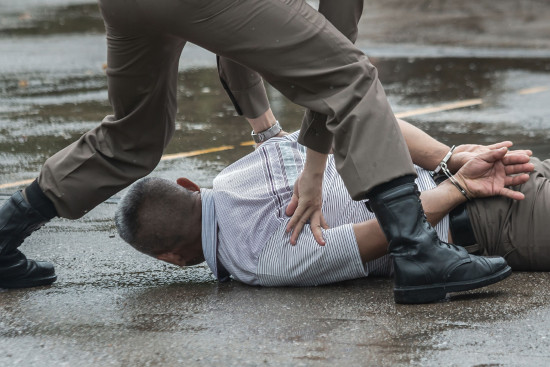
- Excessive Force by Federal Officers: assaults, unlawful arrests, and unreasonable force by ICE, Border Patrol, and other federal law enforcement officers, including in the Houlton and Swanton Border Patrol sectors that cover northern New England.
- Immigration Detention and ICE Abuses: excessive force, medical neglect, prolonged solitary confinement, and unsafe conditions in ICE custody and in county jails holding federal detainees under contract. (See our dedicated ICE civil rights abuses page.)
- Wrongful Detention and Malicious Prosecution by Federal Agents: false arrest, false imprisonment, abuse of process, and prosecutions initiated without probable cause.
- Deaths in Federal Custody or Federal Care: wrongful death claims arising from force, neglect, or the failure to provide emergency medical care.
- Injuries Caused by Federal Contractors and Agencies: cases where a federal employee’s negligent supervision, inspection, or placement decision contributed to the harm.
- Postal Service and Federal Vehicle Crashes: collisions caused by USPS drivers, military vehicles, and federal employees driving in the course of their work.
- Federal Premises Liability: injuries on federal property, including VA facilities, federal buildings, military installations, national parks, and national forests.
- VA Medical Malpractice: misdiagnosis, delayed diagnosis, surgical errors, medication errors, and negligent care at VA hospitals and clinics, including Togus in Augusta, Manchester, and White River Junction.
- Military and Federal Hospital Malpractice: negligent care at military treatment facilities and other federally operated health care programs.
- Malpractice at Federally Funded Health Centers: many community health centers and their providers are “deemed” federal employees under federal law, which means a routine-looking malpractice case is actually a federal claim with a federal deadline. Patients frequently learn this too late.
Compensation Available in a Federal Claim
If a federal employee’s negligence or misconduct caused your injuries, you may be entitled to recover economic damages (medical expenses, lost wages and earning capacity, and the cost of future care), and non-economic damages (pain and suffering, emotional distress, and loss of enjoyment of life). In a death case, the recovery is defined by the wrongful death law of the state where the negligence happened. Punitive damages are not available against the United States, which makes proving the full measure of compensatory damages that much more important, and it is exactly the work we do best.
Frequently Asked Questions
Can I sue the federal government?
Yes, but only on the government’s terms. The Federal Tort Claims Act waives sovereign immunity for injuries caused by federal employees acting within the scope of their employment. You must first file an administrative claim with the responsible agency, and you cannot go to court until that process is complete.
How long do I have to file a claim against a federal agency?
Generally two years from when the claim accrues, and that deadline is enforced strictly. If the agency denies your claim in writing, you then have six months to file suit. Some claims, including those against state and local officials or municipalities, carry even shorter notice deadlines. Do not wait to speak with an attorney.
What is Standard Form 95?
SF-95 is the form used to present an administrative claim to a federal agency. The form itself is not technically required, but a written claim with a specific dollar demand is, and using the form is the safest way to satisfy the requirement. Because your recovery is generally capped at the amount you claim, the number on that form matters enormously.
I was hurt at a community health center: why is this a federal case?
Many community health centers and their providers are deemed federal employees under federal law. That means a malpractice claim against them is an FTCA claim, subject to the two-year federal deadline and the administrative claim requirement, even though the clinic looks like any other local practice. Patients often discover this after the deadline has passed, which is why an early case evaluation matters.
Can I sue an ICE or Border Patrol officer who used force against me?
In many cases, yes: through a claim against the United States. Federal law specifically allows claims for assault, battery, false arrest, false imprisonment, abuse of process, and malicious prosecution committed by federal law enforcement officers. Claims against the individual officers themselves are far more limited than they once were, which is why these cases have to be built carefully from the start.
Will my case go before a jury?
No. FTCA cases are decided by a federal judge. That changes how a case should be investigated, framed, and presented, and it is one more reason to work with attorneys who have actually tried these cases.
Do I have to pay anything upfront?
No. We handle federal claims on a contingency fee basis, meaning you pay nothing unless we recover compensation on your behalf. Federal law also caps attorney’s fees in these cases at 20% of an administrative settlement and 25% after suit is filed.
What if my loved one died in federal custody or federal care?
You may be able to bring a wrongful death claim on behalf of their estate. These cases demand an immediate investigation, and we are prepared to move quickly to preserve evidence and hold the government accountable.
Contact Gideon Asen to Discuss Your Claim Against the Federal Government
If you or someone you love has been hurt by VA or military medical malpractice, a federal vehicle crash, unsafe conditions on federal property, or abuse by federal officers, you do not have to take on the United States alone, and you do not have time to wait. Contact Gideon Asen today for a free, confidential consultation.
Gideon Asen
Practice Areas
What they say
“When Ben reached out, it gave us hope that someone would take a chance on us, that someone was looking out for us. It's probably the best call we have ever made.”


